
Preventative Botox in Your 20s and 30s: Is It Actually Worth It?
You are standing in front of the bathroom mirror, and you notice it for the first time: a faint line between your brows that used to disappear the second you stopped frowning — and now lingers for a beat longer.
You are 29. Maybe 34. You are not looking to change your face. You are wondering whether there is something you could do now so that line never becomes permanent.
That question is the entire idea behind preventative Botox, and it has become one of the most common conversations we have with patients at The Bar Aesthetics & Wellness in Davenport. It is also one of the most misunderstood. So let us walk through what it actually is, what the evidence does and does not support, and how to tell whether it makes sense for you.
What “Preventative Botox” Actually Means
Preventative Botox is not a different product or a different procedure. It is the same neuromodulator — botulinum toxin type A — used at a different moment in the aging timeline, usually in smaller amounts.
Traditional Botox treats lines that are already visible when your face is at rest. Preventative Botox is started before those lines have settled in, while they still only appear when you are actively making an expression.
The goal is not a frozen face. It is softening the repetitive muscle movement that gradually etches lines into the skin, so those lines take longer to form in the first place.
The Science: Dynamic Lines vs. Static Lines
Understanding this distinction is the whole ballgame.
Dynamic lines appear only when you move — when you squint, raise your brows, or concentrate. Your skin folds, then springs back flat.
Static lines are visible even when your face is completely relaxed. They are the result of years of that same folding, combined with the natural loss of collagen and elastin that begins in your mid-to-late twenties.
Think of it like folding a piece of paper. Fold it once and it flattens out. Fold it in the same spot thousands of times and a permanent crease forms. Neuromodulators reduce how forcefully those muscles contract, which means fewer and gentler folds over time.
What the Evidence Actually Shows
Here is where we want to be straightforward with you, because a lot of marketing around this topic is not.
The strongest and most frequently cited evidence is a long-term case study of identical twins, in which one twin received regular treatment to the forehead and glabella over roughly 13 years and the other did not. The treated twin showed noticeably fewer static lines at follow-up. It is a compelling result — and it is also a study of two people.
The broader picture: we have strong, well-established evidence that botulinum toxin safely and effectively softens existing expression lines. We have plausible mechanistic reasoning and limited long-term data suggesting that starting earlier may delay the formation of permanent ones. What we do not have is a large randomized trial proving that preventative treatment in your twenties will meaningfully change how you look at 60.
Anyone who tells you otherwise is selling, not advising.
It Is Not About Your Age — It Is About Your Face
There is no magic number. We have patients in their late thirties whose skin genuinely does not need it yet, and patients at 26 with strong, expressive brow muscles and visible etching already starting.
Instead of asking “am I old enough?”, look for these signals:
- A line between your brows or across your forehead that stays visible for a moment after you relax
- Crow’s feet that are becoming faintly visible even without smiling
- Strong, expressive facial movement — some people simply recruit these muscles more forcefully than others
- A family pattern of early forehead or glabellar lines
- Significant sun exposure history, which accelerates collagen breakdown
And reasons it may be worth waiting:
- Your lines fully disappear at rest, with no lingering shadow
- You are not yet consistent with daily SPF and a solid skincare routine — those come first
- You are pregnant, breastfeeding, or trying to conceive
- You have a neuromuscular condition such as myasthenia gravis or ALS
- The budget would be a real strain — this is an ongoing commitment, not a one-time purchase
What Preventative Treatment Looks Like in Practice
The biggest difference between preventative and corrective treatment is restraint.
Younger patients typically need fewer units, placed more conservatively. The intent is to soften movement, not eliminate it — you should still be able to raise your brows and look surprised, concerned, or delighted. You are sometimes going to hear this called “baby Botox” or microdosing, and it is the approach we favor for anyone starting early.
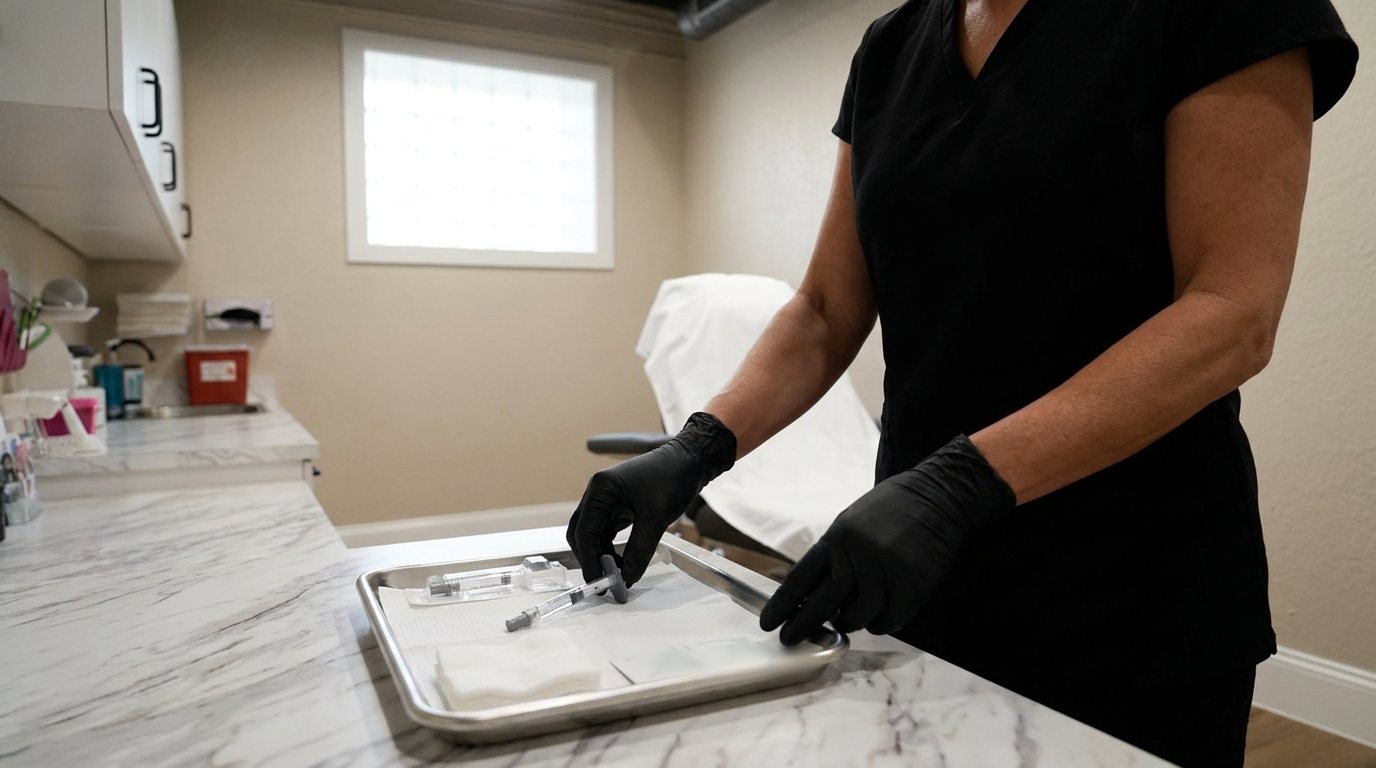
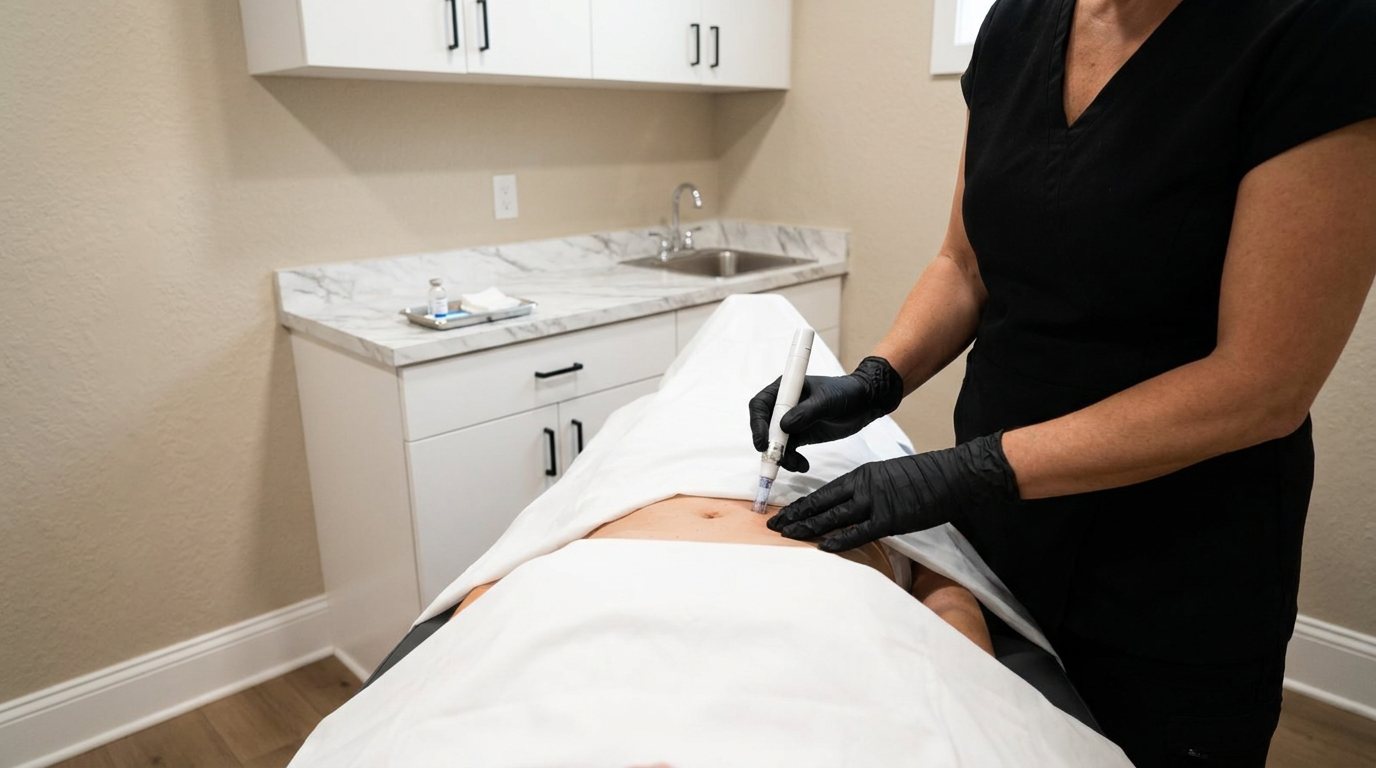
At The Bar, every treatment starts with a consultation with Marisa McCune, MSN, ARNP, FNP-BC, where we assess your muscle strength and movement patterns at rest and in motion before any dosing decisions are made. A face that has never been treated needs a light hand and a plan, not a template.
Common areas for preventative treatment include the glabella (the “11s” between the brows), horizontal forehead lines, and crow’s feet at the outer corners of the eyes.
What to Expect After Your Appointment
The treatment itself takes about 10 to 15 minutes, with no downtime — most patients come in on a lunch break and go back to work.
- Days 1–3: Little to no visible change. The neuromodulator is binding to nerve endings.
- Days 4–7: Movement begins to soften noticeably.
- Day 14: Full results. This is when we assess and touch up if needed.
- Months 3–4: Movement gradually returns. Time to reassess.
For a deeper breakdown of the timeline and what affects how long results hold, see our guide to how long Botox lasts.
One benefit patients often notice with consistent long-term treatment: the treated muscles gradually become less forceful, and some people find they can stretch their intervals slightly over the years.
The Honest Downsides
We would rather you decide with the full picture.
It is a commitment. Results are temporary. Preventative treatment only works as prevention if it is maintained over years, and that has a real ongoing cost.
There are side effects. Most are mild and temporary: small bruises at injection sites, a short-lived headache, mild tenderness. Less commonly, temporary brow or eyelid heaviness or asymmetry can occur — usually the result of product placement, which is why injector experience matters more than price.
It is not a substitute for the basics. Neuromodulators do nothing for sun damage, pigment, texture, or collagen loss. If you are choosing between preventative Botox and daily broad-spectrum SPF, a retinoid, and not smoking — choose those. They matter more, and they are cheaper.
It can be overdone. Starting early and treating aggressively is a real risk. Over-relaxing one muscle group can cause neighboring muscles to compensate, which is how people end up with unnatural results. Conservative dosing is not us being stingy; it is the actual standard of care.
Frequently Asked Questions
What is the right age to start preventative Botox?
There is no universal age. Botulinum toxin is FDA-approved for adults 18 to 65 for frown lines, and most people who start preventatively do so somewhere between their mid-twenties and mid-thirties — based on when lines begin lingering at rest, not on a birthday.
Will my wrinkles be worse if I stop?
No. This is one of the most persistent myths. If you stop treatment, muscle movement gradually returns to its baseline and lines return to where they would have been. They do not come back worse — they simply resume their normal course.
Will I look frozen or expressionless?
Not with appropriate dosing. Preventative treatment uses fewer units precisely so that natural expression is preserved. If you have seen an overdone result, you have seen too much product or poor placement, not the treatment working as intended.
Is Botox safe to use long-term?
Botulinum toxin has decades of clinical use for both cosmetic and medical purposes, with a well-characterized safety profile when administered by a qualified, licensed provider. A small number of patients develop reduced responsiveness over many years, which is one more reason conservative dosing is preferable.
Botox, Dysport, or Xeomin — does it matter?
All three are botulinum toxin type A and all three work on the same principle. They differ slightly in formulation, spread, and onset speed. We carry multiple options and will recommend based on the treatment area and your goals rather than on brand loyalty.
Talk It Through Before You Decide
Preventative Botox is a reasonable choice for the right person at the right time — and completely unnecessary for plenty of others. The only way to know which one you are is an honest, unhurried assessment of your actual face.
At The Bar Aesthetics & Wellness in Davenport, we serve patients across the Quad Cities, including Bettendorf, Moline, and Rock Island. Our consultations are exactly that — a conversation. If the answer is “not yet,” we will tell you that.
Schedule your consultation with The Bar Aesthetics & Wellness and let us build a plan that fits where your skin actually is today.
This article is for general educational purposes and is not medical advice. Individual results vary. Neuromodulator treatment is not appropriate for everyone; a licensed provider should evaluate your medical history, medications, and goals before treatment.