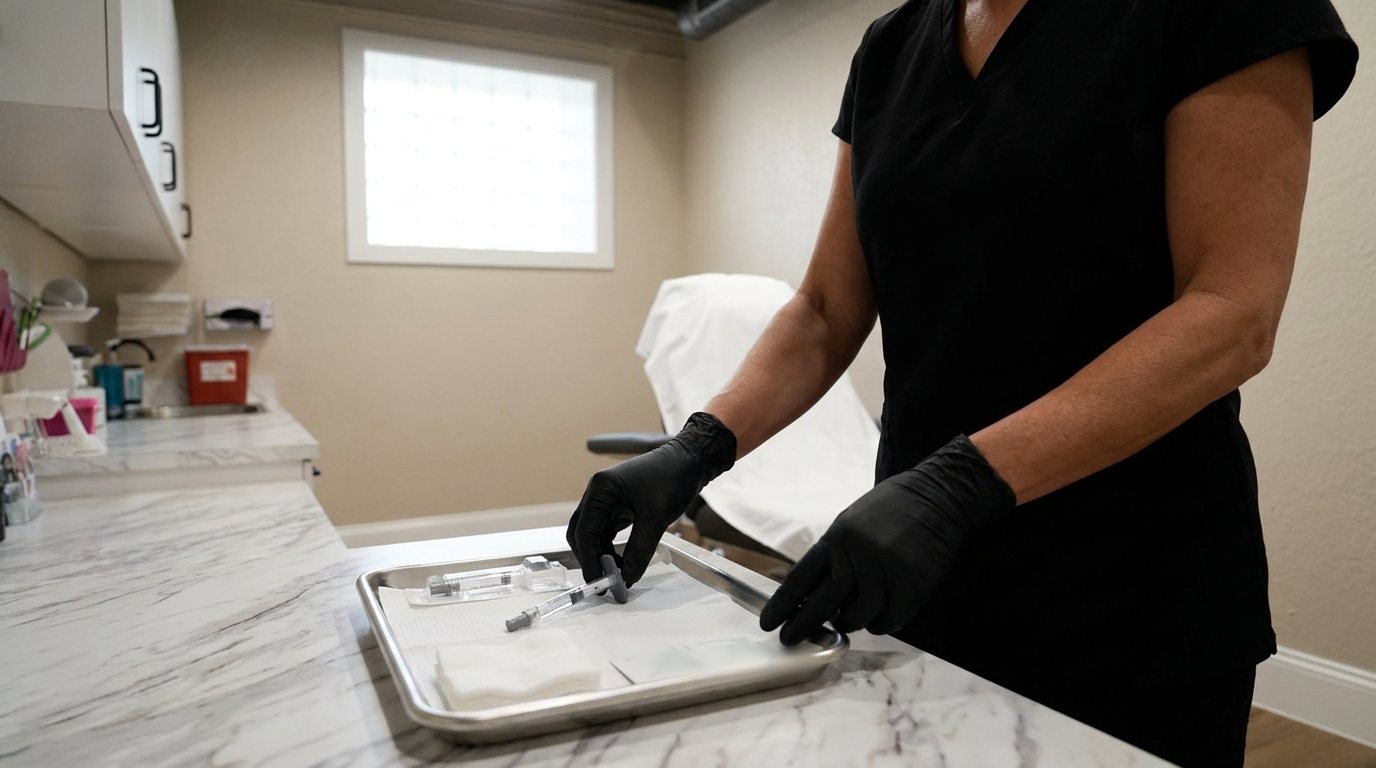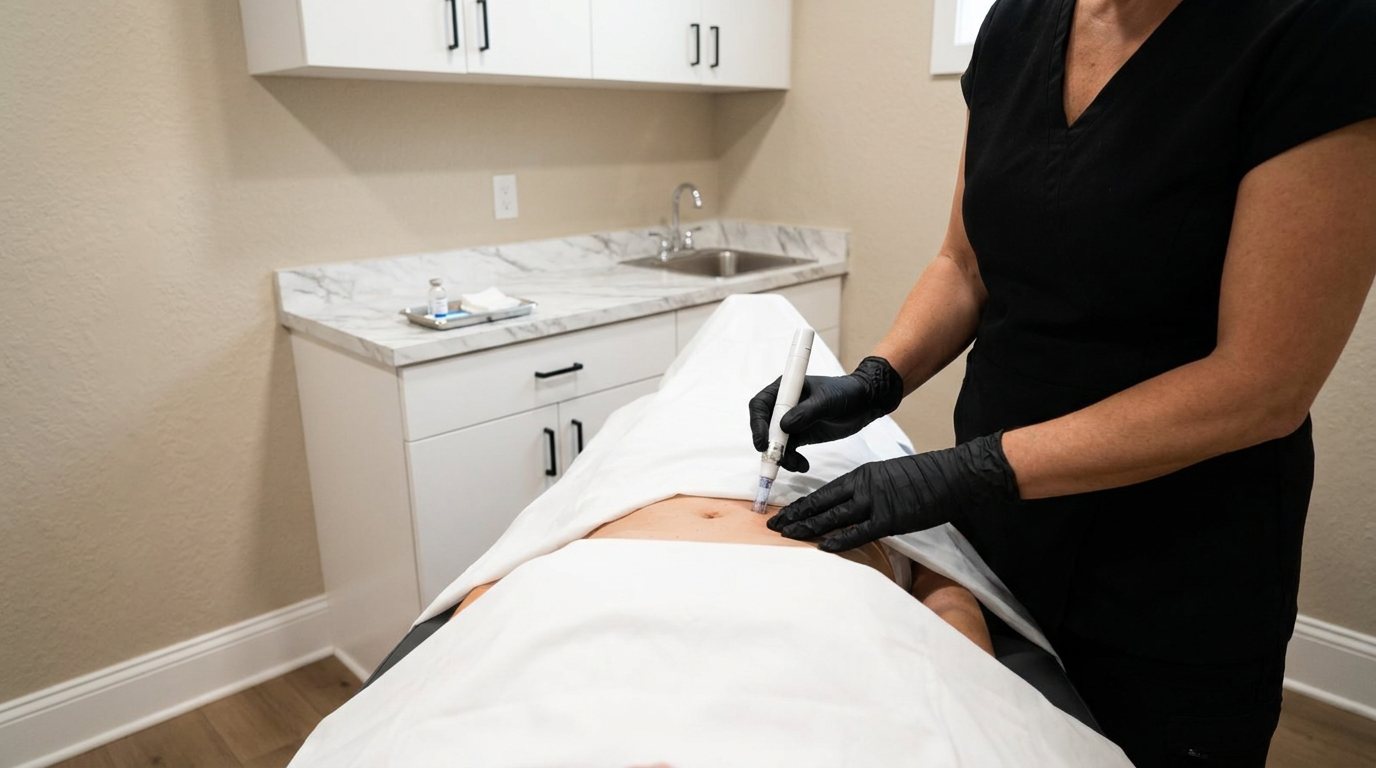

If you’ve been researching natural, regenerative skin treatments, you’ve probably run into two acronyms that look almost identical: PRP and PRF. The PRF vs PRP question comes up in our Davenport treatment rooms almost every week — and it’s a good one, because while the two therapies are closely related, they are not the same thing. Both use your own blood to encourage your skin to repair and renew itself, but the way each one is processed changes how it works, how long it keeps working, and what it’s best suited for.
In this guide, we’ll walk through what PRP and PRF actually are, the real differences between them, and how to think about which one fits your goals — whether that’s brightening tired under-eyes, improving skin texture, or supporting your results from other treatments.
PRP and PRF Start the Same Way: Your Own Blood
Both platelet-rich plasma (PRP) and platelet-rich fibrin (PRF) are autologous treatments — meaning everything used comes from you. A small sample of your blood is drawn, just like a routine lab test, and then spun in a centrifuge to concentrate the components that drive healing: platelets, growth factors, and in the case of PRF, white blood cells and a small number of stem cells.
Those concentrated platelets are the reason these treatments exist. Platelets are your body’s first responders — they release growth factors that signal skin cells to build new collagen, form new blood vessels, and repair tissue. By concentrating them and placing them exactly where your skin needs support, PRP and PRF aim to amplify a process your body already knows how to do.
If you’d like a deeper dive into the science, our post on what platelet-rich fibrin is and how it works covers the biology in more detail.
PRF vs PRP: The Key Differences
The two treatments part ways in the centrifuge. It sounds like a small technical detail, but it changes the final product in three meaningful ways.
1. Spin speed — and what survives it
PRP is spun at a relatively high speed. That separates the plasma and platelets cleanly, but the force also pushes heavier cells — white blood cells and stem cells — out of the final product. PRF is spun slower and for less time. The gentler spin keeps more of those cells in the mix, so the final concentrate contains platelets plus white blood cells and a small population of stem cells that PRP typically leaves behind.
2. The fibrin matrix: a slow-release scaffold
This is the difference that matters most for results. Because PRF is processed without anticoagulants, it forms a natural fibrin matrix — a soft, spongy scaffold that traps the platelets inside it. Instead of releasing their growth factors all at once, the platelets in PRF release them gradually as the fibrin breaks down, which is generally understood to extend the release window meaningfully compared to PRP’s quicker burst. A slower release gives your cells a longer, steadier signal to build collagen.
3. Additives — or none at all
PRP tubes typically contain an anticoagulant to keep the sample liquid during processing. PRF uses no additives at all: it’s drawn, spun, and used, with nothing added and nothing removed. For patients who want the most natural version of a natural treatment, that simplicity is part of the appeal.
What Does This Mean in Practice?
Think of PRP as espresso and PRF as a slow pour-over. Same origin, different delivery. PRP delivers a fast, concentrated hit of growth factors; PRF delivers a slower, longer, arguably more complete one — with extra cell types along for the ride.
Common areas where these treatments are used include:
- Under-eye hollows and dark circles — the thin, delicate under-eye area responds well to a gentle, natural approach. We covered this in depth in our guide to PRF under-eye treatment in the Quad Cities.
- Skin texture and tone — applied with microneedling or injected, platelet therapies can support smoother texture and a more even, rested look over a series of sessions.
- Thinning hair — platelet-based scalp treatments are used to support the follicle environment; suitability varies from person to person and is best assessed in consultation.
- Alongside other treatments — many patients pair PRF with microneedling or use it to support recovery after other procedures.
Results with any regenerative treatment build gradually — collagen takes weeks to remodel — and individual results vary. That’s not a disclaimer we’re required to write so much as an honest description of how these therapies work: they support your own biology rather than overriding it.
Which One Is Right for You?
At The Bar Aesthetics & Wellness, we offer platelet-rich fibrin (PRF) as our platelet therapy of choice. Given the choice between the two, we prefer PRF’s no-additive processing, its broader cell profile, and the slow-release fibrin scaffold — for facial aesthetics, we believe the longer growth-factor release is simply a better fit for how skin actually rebuilds.
That said, “which is right for me?” is really a consultation question. The honest answer depends on the area you want to treat, your skin, your timeline, and your goals. Some concerns are better served by a different tool entirely — sometimes the best answer to a PRF question is a filler plan, a Morpheus8 series, or simply good skincare. A provider who offers a full range of options can tell you the difference; a provider who only sells one thing usually can’t.
Frequently Asked Questions
What is PRF used for?
PRF is most often used for under-eye rejuvenation, overall skin quality (texture, tone, fine lines), supporting thinning hair, and enhancing microneedling treatments. Because it comes entirely from your own blood, it’s often chosen by patients who prefer a natural option or who want to avoid synthetic products.
Does PRF work for under-eye circles?
The under-eye area is one of the most popular places to use PRF. Dark circles and hollows often involve thin skin and volume loss, and PRF is used to support skin quality and subtle volume in that delicate zone. Improvement is typically gradual across a series of sessions, and results vary — some under-eye concerns (like pigment-driven darkness) respond differently than structural hollows, which is exactly what a consultation sorts out.
Where can I see PRF before-and-after photos?
Here’s our honest answer: we don’t publish before-and-after photos, ours or anyone else’s. Patient photos deserve privacy, and curated before-and-afters — increasingly including AI-generated ones circulating online — are an unreliable way to predict what a treatment will do for your face. Instead, we’d rather show you what PRF can realistically do for your specific concerns in person, and be upfront about what it can’t.
Talk Through PRF vs PRP with a Provider in the Quad Cities
If you’re weighing PRF against PRP — or just wondering whether a natural, regenerative treatment fits your goals — the fastest way to a real answer is a conversation. Marisa McCune, MSN, ARNP, FNP-BC and the team at The Bar Aesthetics & Wellness in Davenport work with patients from across the Quad Cities — Bettendorf, Moline, Rock Island, and beyond — and consultations are exactly that: a conversation, not a sales pitch.
Book a consultation at The Bar Aesthetics & Wellness and find out whether PRF is the right next step for your skin.