
If you’ve been thinking about trying Botox, you’ve probably typed some version of the same question everyone asks: how many units of Botox do I actually need? It’s a smart question — units are how Botox is measured, dosed, and usually priced, so understanding them is the key to understanding both what your treatment involves and what it will cost. In this guide, we’ll walk through the typical unit ranges by treatment area, how per-unit pricing works, and what really determines your personal number — so you can walk into a consultation in the Quad Cities feeling informed instead of guessing.
One thing to know upfront: the ranges below are general educational figures, not a quote or a treatment plan. Your ideal dose depends on your anatomy, your goals, and your injector’s assessment — which is exactly why a consultation matters.
First, What Is a “Unit” of Botox?
A unit is simply the standardized measurement of botulinum toxin — the active ingredient in Botox. It’s not a syringe, a vial, or an “area.” Units measure the biological activity of the product, which is why doses are described the same way whether you’re treating frown lines or a strong jaw muscle.
Because units are the true measure of how much product you receive, they’re also the most transparent way to think about pricing. Two providers might quote very different “per area” prices while actually using very different amounts of product. When you understand units, you can compare apples to apples.
How Many Units of Botox Do You Need? Typical Ranges by Area
Every face is different, but decades of clinical use have produced fairly consistent starting ranges. Here’s what’s commonly discussed for the most popular treatment areas:
Forehead Lines
The horizontal lines across your forehead come from the frontalis muscle, and treating them typically involves somewhere in the range of 10 to 20 units. The forehead is almost always treated together with the frown lines between the brows — treating one without the other can affect how your brows sit, so most injectors plan them as a pair.
Frown Lines (the “11s”)
The vertical lines between your eyebrows — the glabellar complex — are the area Botox was first FDA-approved to treat cosmetically, and the on-label dose for this area is 20 units. Many people are surprised the number is that high for such a small area, but the muscles here are strong and work hard all day.
Crow’s Feet
The smile lines fanning out from the corners of your eyes are typically treated with around 12 units per side — roughly 24 units total on-label. Lighter doses are sometimes used for a softer, first-time approach.
Smaller and Specialty Areas
A lip flip usually takes only about 4 to 8 units, which is why it’s one of the most affordable ways to try Botox. A subtle brow lift may use a handful of units placed near the tail of the brow. On the other end of the spectrum, masseter Botox for jaw slimming or clenching relief often involves 20 to 30 units per side, because the masseter is one of the strongest muscles in the body.
Add it up and a typical full “upper face” treatment — forehead, frown lines, and crow’s feet — commonly lands somewhere between 40 and 64 units. That’s the honest math most first-timers never see spelled out.
Botox Cost Per Unit: How Pricing Actually Works
Most med spas price Botox one of two ways: per unit, or per area. Per-unit pricing means you pay for exactly the amount of product used. Per-area pricing bundles a zone (like “forehead”) into one flat fee, regardless of dose.
Neither model is wrong, but per-unit pricing is the more transparent of the two — it lets you see exactly what you’re paying for, and it scales fairly whether you need a light touch-up or a fuller dose. When you’re comparing prices between providers in the Quad Cities, always ask two questions: what is the price per unit, and how many units does the quote include? A low headline price attached to a low unit count isn’t actually a better deal — it’s just a smaller treatment.
It’s also worth asking what’s behind the price. An experienced injector who maps your facial anatomy, doses conservatively, and invites you back for a two-week check is delivering something different from a volume operation moving patients through as fast as possible. With a medical treatment, credentials and technique are part of what you’re paying for.
What Determines Your Personal Number
Within those typical ranges, your injector will consider several factors when recommending your dose. Muscle strength matters most — stronger facial muscles (more common in men, which is why “Brotox” doses often run higher) generally need more units to relax. The depth and pattern of your lines, how expressive your face is, your treatment history, and your goals all play a role too.
Your goals deserve special mention. Some people want maximum smoothing; many others — most of our Quad Cities clients included — want to look rested and refreshed while still moving naturally. A skilled injector can dose for either outcome, but only if you talk about it honestly at your consultation. Results and how long they last vary from person to person, and no reputable provider will promise a specific outcome.
Tips for Your First Botox Appointment
If you’re new to Botox, starting conservative is a strategy, not a compromise. You can always add units at a follow-up visit, but you can’t remove them — Botox simply has to wear off on its own over a few months. Many injectors prefer to start first-timers at the lower end of a range, then assess at a two-week follow-up when the full effect is visible.
Keep in mind that if you like your results, maintaining them typically means repeat treatments every three to four months. Understanding your per-unit cost makes it easy to budget for the year, and it’s worth asking about payment options if that helps you plan. And if you’re curious how Botox compares to its best-known alternative, we’ve broken down Botox vs Dysport in a separate guide.
Frequently Asked Questions
How many units of Botox do you need for your forehead?
Typically somewhere between 10 and 20 units for the horizontal forehead lines, usually treated together with the frown lines between the brows (20 units on-label) so your brows stay balanced. Your exact dose depends on your muscle strength and how much movement you want to keep.
How many units are in a syringe or vial of Botox?
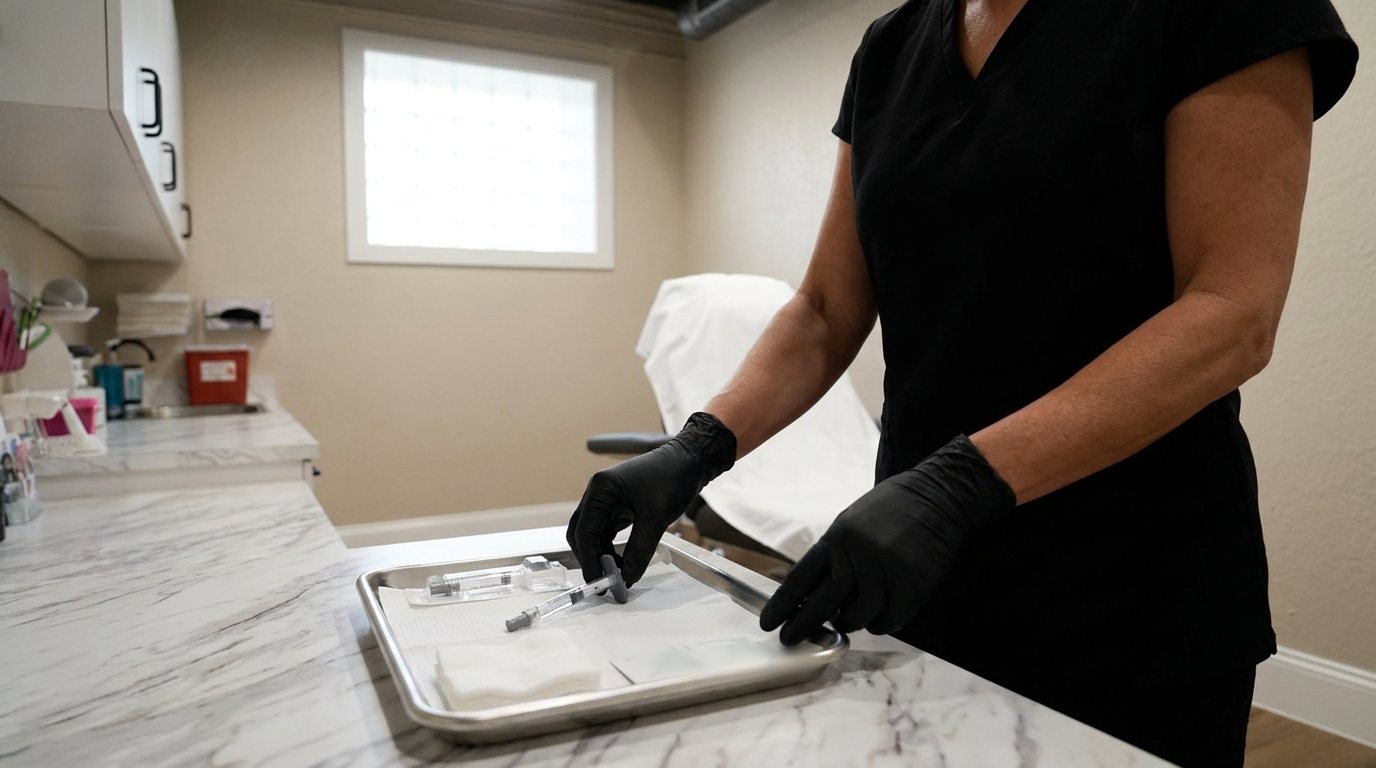
Botox arrives at a practice in vials of 50 or 100 units, which the provider reconstitutes and draws into syringes based on your treatment plan. There’s no fixed “syringe size” — the syringe simply holds however many units your plan calls for, which is another reason per-unit pricing is the clearest way to understand what you’re getting.
How many units of Botox are used for the masseter?
Masseter treatment for jaw slimming or clenching relief commonly uses around 20 to 30 units per side — noticeably more than facial-line treatments, because the masseter is a much stronger muscle. We cover doses, timelines, and costs in detail in our masseter Botox guide.
Get a Real Number, Not a Guess
Ranges are useful for planning, but the only number that matters is yours. At The Bar Aesthetics & Wellness in Davenport, our nurse practitioner–led team maps your facial anatomy, talks through your goals, and gives you a clear, unit-by-unit plan with transparent pricing before anything is scheduled. If you’re in Bettendorf, Davenport, Moline, Rock Island, or anywhere in the Quad Cities, learn more about Botox at The Bar or book a consultation — and get an answer that’s actually about your face.